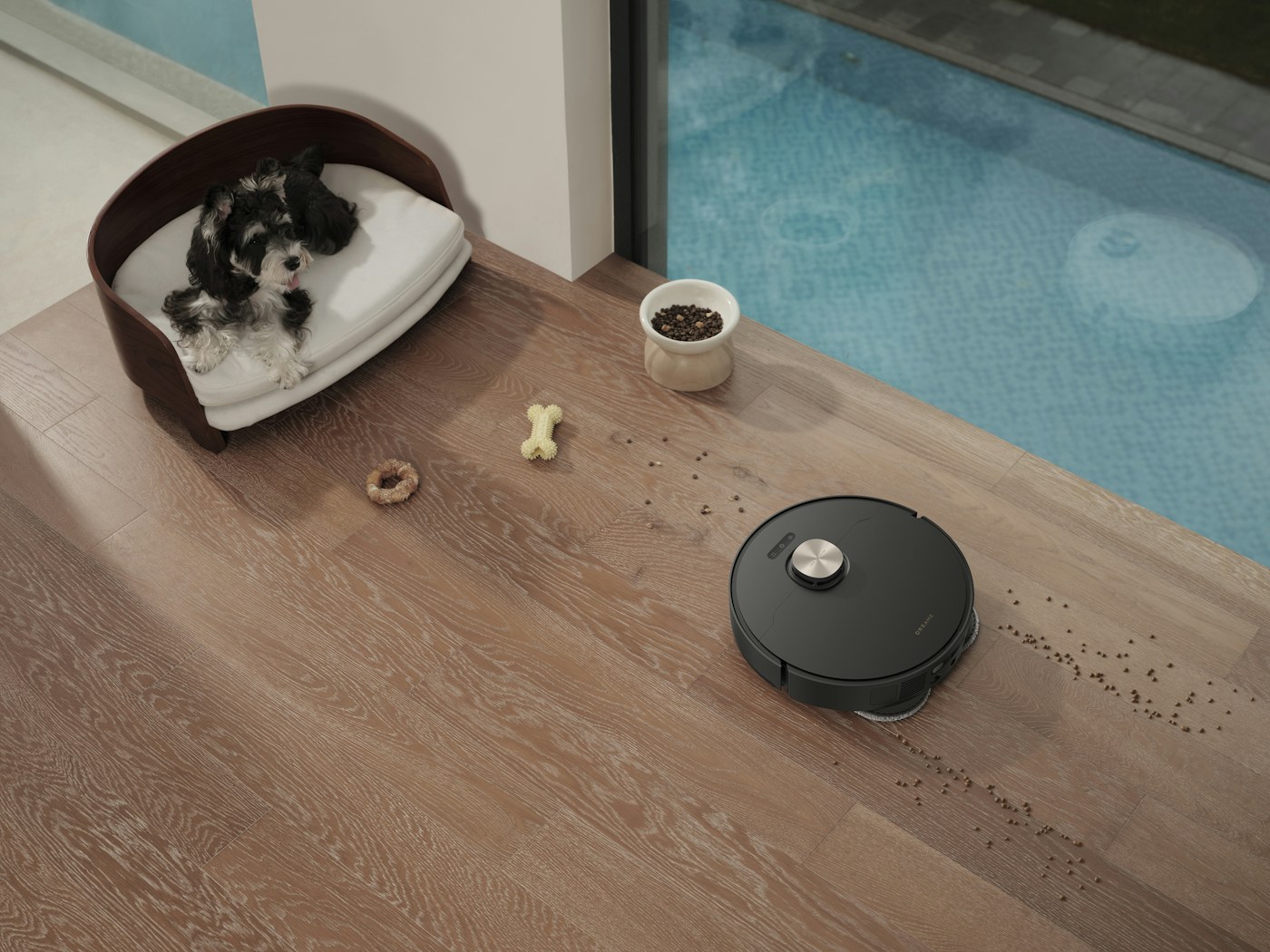
Pets change the shape of household dust. Hair binds with fibers, litter travels across hard floors, and dander settles around soft furnishings. X1 Pet is designed to keep that mixture moving through the cleaning path instead of wrapping around the brush or building up inside the dock.
X1 Pet at a glance
The model combines 11,000 Pa maximum suction, a compact 348 x 348 x 101 mm body, a dual anti-tangle brush system, sealed dust path and odor-control dock filter. It is intended for long-haired pets, frequent shedding, litter tracking and homes with a mix of hard flooring and low-pile rugs.
- Up to 200 sqm coverage per charge with scheduled pet-zone cleaning.
- 20 mm threshold capability in suitable conditions.
- Higher-frequency edge pass and pet-zone routines in the app.
- Accessible brush end caps for quick hair removal.
Suction is only one part of pet cleaning
High suction helps lift embedded hair from low-pile carpet, but airflow through the brush housing and dust path matters just as much. A restrictive path can lose performance even when the motor is strong.
The most useful comparison is not just the maximum pascal figure. Look at the brush design, the size of the dust path, the filter type and how easily hair can be removed from the ends of the roller. A machine that remains clear will outperform a stronger machine that regularly clogs.
The X1 Pet is configured around this balance: 11,000 Pa of suction, a dual anti-tangle brush system and an odor-control dock filter for daily shedding. The H1 Pet brings a similar focus to smaller homes.
Why anti-tangle brush design matters
Long hair wraps around a rotating brush when the brush pulls it in without a way to release it. Pet hair and human hair may wrap differently, but both can reduce contact and airflow over time.
Look for a brush that combines a combing edge, flexible cleaning elements and accessible end caps. A tangle-resistant design should be easy to inspect, not simply labeled as maintenance-free. Even a good brush needs periodic checks.
- Check the brush after the first three cleaning cycles.
- Remove wrapped hair before it compresses into the bristles.
- Inspect the side brush for long hair and carpet fibers.
- Verify that the brush can be removed without tools.
Litter, thresholds and floor transitions
Litter tracking tends to concentrate near trays and doorways. Scheduled whole-room cleaning helps, but zone cleaning can increase frequency around the litter area. The robot must be able to enter the zone safely and return to its dock without fighting a rug edge or a raised door saddle.
Before selecting a model, measure the transition between hard floor and rugs, check the height of the litter tray lip and clear loose cords from the route. No navigation system is a substitute for a safe operating environment.
Pet-safe automation starts with prevention. Remove accidents, loose waste and fragile objects before a scheduled clean.
Dock hygiene and odor control
Dust from a pet household can carry odor. A sealed dust path and a dedicated odor filter help, but the dock still needs routine care. Empty or replace the bag on the recommended interval, clean the filter, and inspect the dock inlet for hair or debris.
If the dock uses water for mop washing, follow the drying routine and do not leave a damp pad in place for long periods. Odor control is a maintenance outcome, not a single component.
Safe operation in a pet household
Introduce the robot gradually. Let pets inspect it while it is stationary, then run a short cycle in another room. Loud sudden docking, dangling cords and loose toys can create unnecessary stress.
Keep pet food bowls, water bowls and pet beds inside no-go zones if the robot should not approach them. Never schedule a clean when a pet is alone with the robot if the animal is anxious or destructive.
A realistic maintenance schedule
- After every few cleans: inspect the brush and side brush.
- Weekly: check the filter, dust inlet and dock area.
- Monthly: wash reusable components according to the manual and inspect sensors.
- As indicated: replace bags, filters and brush components with genuine parts.
If the home has several long-haired pets, the interval may be shorter. Use the robot’s reported maintenance indicators as a prompt, not as a reason to skip a physical check.
Choosing the right xftech model
For larger homes with heavy shedding, mixed floors and a desire for a fuller dock, start with X1 Pet. For a compact apartment with a smaller budget, H1 Pet provides focused hair pickup and app-based scheduling. For a commercial pet facility, a service-led S1 deployment will usually be more appropriate than a home model.
If the home has high-pile carpet, pet accidents or very tight furniture clearances, review those limits before purchase. The correct answer may be a different model, a different cleaning routine, or both.
Can a robot vacuum handle pet hair every day?
Yes, provided the brush and filter are checked regularly and the home is clear of wet waste, loose cords and fragile items.
Is higher suction always better for pet hair?
No. Airflow, brush contact, anti-tangle design and a clear dust path can matter more than the highest suction figure.
Can the robot clean around a litter tray?
It can clean an accessible floor area around the tray. Keep the tray itself and loose litter outside the cleaning route, and use a no-go zone when needed.